
'It was tough financially for the first few years but my friends and family supported me and once he did well at the 2018 Commonwealth Games, there was no looking back.'

'Wherever the government has provided incentives for the purchase of two-wheelers, three-wheelers, cars, buses, and trucks, it gets a push for most of these alternate fuels. '

Their shared brief: To assert India's case with clarity, rebut hostile narratives, and secure enduring partnerships for global counter-terror cooperation.

Key economies like India and China are rapidly becoming the biggest trading partners of the Gulf countries as compared to other regions, a new study has said.

FMCG major Britannia Industries' results for the January-March quarter (Q4) of the financial year 2023-24 (FY24) were received enthusiastically by the market with the share going up by 6.7 per cent on Monday to close at Rs 5,061.60 on the BSE. However, analysts said the results were in line with margins, and disappointing in terms of revenue growth. The consolidated net sales (excluding other operating income) rose 3 per cent year-on-year (Y-o-Y) to Rs 4,010 crore in Q4.

The proposed India-Israel trade pact should be beneficial to both nations and until New Delhi gets a good deal, it would not do an agreement, Commerce and Industry Minister Piyush Goyal said. India and Israel are negotiating a free trade agreement (FTA) since May 2010. "With Israel, until we get a good deal, we will not do an FTA. It has to be reciprocally beneficial," the minister said in San Francisco on Tuesday while interacting with the Indian community.

Wipro Consumer Care and Lighting on Thursday announced the acquisition of Brahmins - a Kerala-based traditional vegetarian, spice mix and ready-to-cook brand - and it has also drawn up plans to launch its snacks brand targeting the southern market. The company will focus on the southern market and is in the process of launching its own brand in the fast-growing ready-to-eat and snacks segment, Wipro Consumer Care and Lighting and managing director Vineet Agrawal told PTI. He further said Wipro Consumer Care and Lighting would take the acquisition route for expanding in the spices segment.
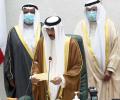
'Modi has visited all these three countries (the UAE more than once, inexplicably) but has left out Kuwait and Oman, the two Gulf countries that are closest to India in their political, cultural and civilisational ethos,' notes Ambassador M K Bhadrakumar.
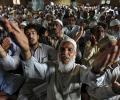
The new sackings and suspensions come days after both the former and current Indian Ambassadors to the UAE cautioned their countrymen about the UAE's strict hate speech laws.

'Now that we are a pure-play India business, many investors are open to investing.'

The Saudi-Pakistan nuclear weapons cooperation is meant to sound alarm bells in Washington, reminding the Obama administration that its overtures to Iran would have serious negative consequences in terms of its ties with its closest allies in the region, says Ambassador Talmiz Ahmad. Exclusive to Rediff.com
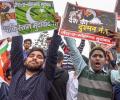
A dossier will be given to the FATF, an international terror financing watchdog.

Engineering and construction major Larsen & Toubro (L&T) reported a 25 per cent rise in net profit attributable to the owners of the company for the January-March quarter of 2024-25, owing to higher revenues and an exceptional gain. For the quarter under review, L&T posted a consolidated net profit of Rs 5,497.3 crore, while revenue rose 10.9 per cent year-on-year (Y-o-Y) to Rs 74,392.28 crore.

'NRI interest has gone up in the past three-four years.'

In a statement, the Ministry of Foreign Affairs expressed its condemnation and denunciation of the statements made by the BJP spokesperson, saying it insulted Prophet Muhammad.

They all spoke of their disappointment at the decisions, given the historic moment of it being held in the Middle East.

Pakistan will remain on the 'grey list' of the Financial Action Task Force (FATF) until it further demonstrates that action is being taken against Jamaat-ud-Dawah chief Hafiz Saeed and Jaish-e-Mohammed founder Masood Azhar who are listed as global terrorists by the United Nations, the global anti-money laundering and terror financing watchdog said on Thursday.

In aviation parlance, an 'interline arrangement' is a deal under which the same ticket covers different legs of the journey flown by different airlines.
'We have not seen too many large deals compared to last quarter.'

The airline will utilise new Airbus A320s, scheduled for delivery this year, to accommodate much of the increased frequencies.

Cooperation in key areas of defence, security and counter-terrorism will be an important aspect of Prime Minister Narendra Modi's discussions during his visit to three West Asian countries -- Palestine, the United Arab Emirates and Oman -- starting Friday.
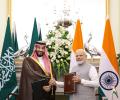
India and Saudi Arabia on Monday decided to expedite implementation of the $50 billion West Coast refinery project, and identified energy, defence, semiconductor and space as areas for intensified cooperation during talks between Prime Minister Narendra Modi and Saudi Crown Prince Mohammed Bin Salman Bin Abdulaziz Al-Saud.

Of $90 billion remittances that India is expected to receive in 2022, only $27.4 billion has come in the first half of the year.
Pakistan has been on the grey list of the Paris-based Financial Action Task Force since June 2018 for failing to check money laundering, leading to terror financing, and was given a plan of action to complete it by October 2019.

The Financial Action Task Force (FATF) on Friday retained Pakistan on its 'grey list' for failing to check money laundering, leading to terror financing, and asked Islamabad to investigate and prosecute senior leaders and commanders of United Nations-designated terror groups, including Hafiz Saeed and Masood Azhar.
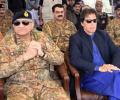
"The FATF plenary decided continuation of Pakistan in 'Grey List' till its next meeting to be held in October," an official privy to the development told PTI.

India has been maintaining that Pakistan extends regular support to terror groups like Lashkar-e-Taiba, Jaish-e-Mohammad and Hizbul Mujahideen, whose prime target is India, and has urged FATF to take action against Islamabad.

India and Saudi Arabia on Monday called on states to reject the use of terrorism against other countries and prevent access to weapons, including missiles and drones, to commit acts of terror.

Sunil Nayyar moved to India as head of sales for Sony.
The Paris-based global watchdog for curbing terror financing and money laundering will hold its virtual plenary session from October 21 to 23. It will review Pakistan's progress on the 27-point action plan.

The mandates which Pakistan has failed include action against all United Nations-designated terrorists like Jaish-e-Mohammed chief Azhar, Lashker-e-Tayiba founder Hafiz Saeed and the outfit's operational commander Zakiur Rehman Lakhvi.

Cleartrip acquired Saudi travel firm Flyin last July and it provides bilingual ground support service and itineraries for inbound tourists.
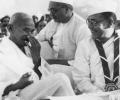
The two leaders had a complex relationship yet formed a partnership and even after their parting of ways, the two admired each other in their efforts for India's freedom.

The global agency said there are "serious deficiencies" on the part of the country in checking terror-financing and it lacks an effective system to deal with it.
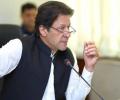
The FATF warned Pakistan that if it doesn't complete a full action plan by June, it could lead to consequences on its businesses
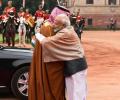
PM Modi also called for a strong action plan for combating extremism.

India's stand at the FATF plenary and other related discussions have always been consistent regarding Pakistan.
Pakistan failed to fulfil six of the 27 mandates so far as a result of which the country continues to be in the grey list of the FATF.

Why should India buy olives from Europe when it could do so from the world's largest producers?

Seeking to wriggle out of the FATF's grey list, Pakistan has imposed tough financial sanctions on 88 banned terror groups and their leaders, including Hafiz Saeed, Masood Azhar and Dawood Ibrahim, by ordering the seizure of all of their properties and freezing of bank accounts, a media report said.
